
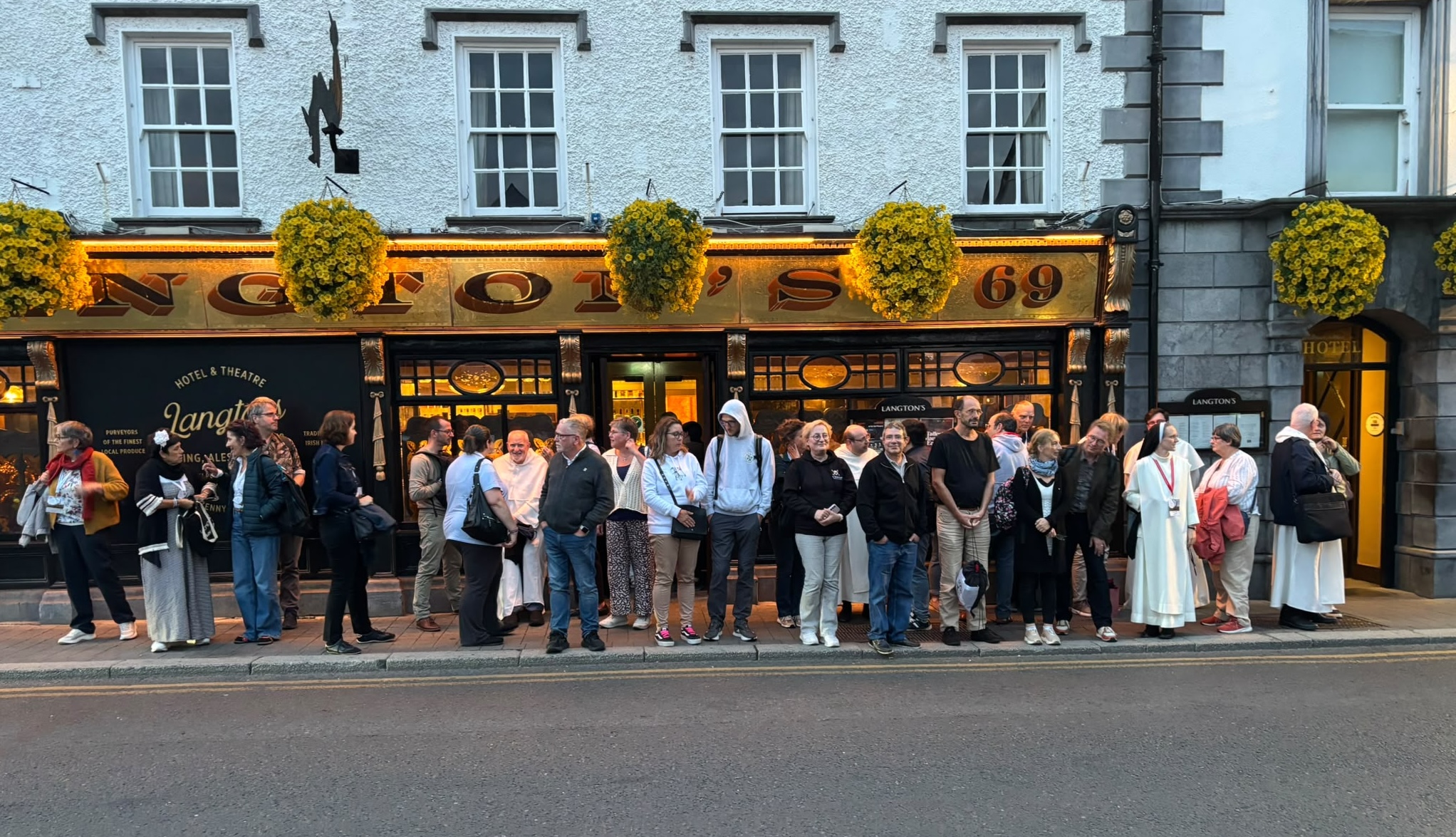
The 12th European Assembly renews the lay Dominican mission of fraternity, formation and preaching.
MAYNOOTH, IRELAND — Lay Dominicans and religious promoters gathered at historic Saint Patrick’s College in Maynooth for the 12th European Assembly of the European Council of Dominican Lay Fraternities (ECLDF). Under the theme “Witnesses to the Truth, Prophets of Hope in a Changing World: Fraternity, Synodality, Preaching,” representatives from some 15 regions came to pray, study and discern the mission of the Dominican laity amid Europe’s social and cultural changes.
The gathering offered a vivid image of communion in diversity. Delegates came from the Nordic countries and the Mediterranean, from the Iberian Peninsula and Eastern Europe, carrying different languages, histories and pastoral realities. Each day was rooted in common prayer. Archbishop Dermot Farrell of Dublin presided at the Eucharist, and proceedings opened with welcomes from Bogdan Penev, interim president of the ECLDF, and fr. John Harris, OP, Prior Provincial of Ireland.
Their remarks emphasized the importance of the lay Dominican vocation at a moment when the Church is searching for renewed ways of listening, drawing near to others and entering into dialogue in an increasingly secularized society. This vision shaped the assembly’s central conviction: preaching is not simply a task to be performed, but a way of life born from contemplation, attentive listening and “intellectual compassion” before the wounds and falsehoods of the present age.
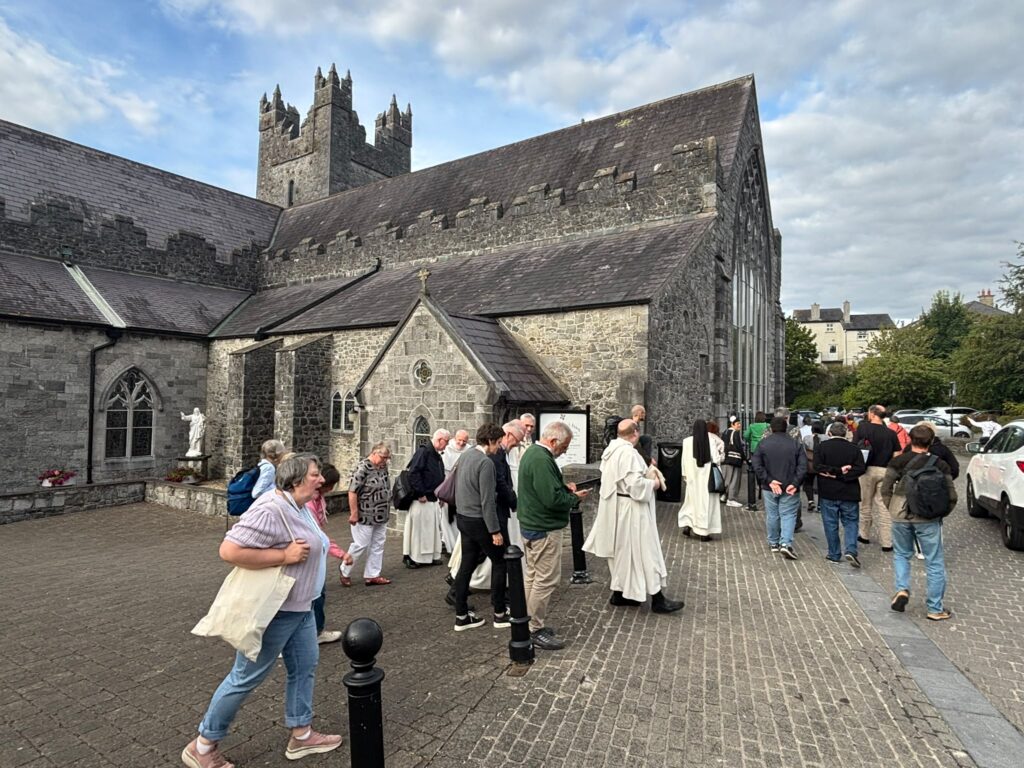
In the keynote address, fr. Paul Murray, OP, explored the “mysticism of truth and mercy.” Recalling Saint Catherine of Siena’s challenge—“If you are what you should be, you will set the whole world on fire”—he presented Dominican Veritas not as rigid ideology, but as an encounter with Christ. He described the mercy of truth, which listens compassionately to suffering; the mercy of joy, reflected in Saint Dominic and Saint Pier Giorgio Frassati; and the mercy of the Cross, through which awareness of human fragility becomes compassion for others.
Fr. Vivian Boland, OP, presented the new system of formation and studies for the Dominican laity. He stressed the integration of human, spiritual, intellectual and apostolic formation. Study must not become an abstract burden, but “knowledge savored,” interiorly assimilated and directed toward mission. Sacred Scripture remains its living source, while Catholic social teaching equips lay Dominicans for public life.
A third presentation linked the first international formation plan for the laity, promulgated in May 2025, with the Master of the Order’s 2026 Pentecost letter, As Fishers and Shepherds. Fr. Thomas Brogl, OP, Socius for Europe, presented the reflection prepared by fr. Cristóbal Torres, OP, General Promoter for the Laity. It identified four urgent audiences for Dominican preaching: the Christian faithful seeking deeper formation; those wounded by or disillusioned with the Church; the secular and pluralistic world; and younger generations.
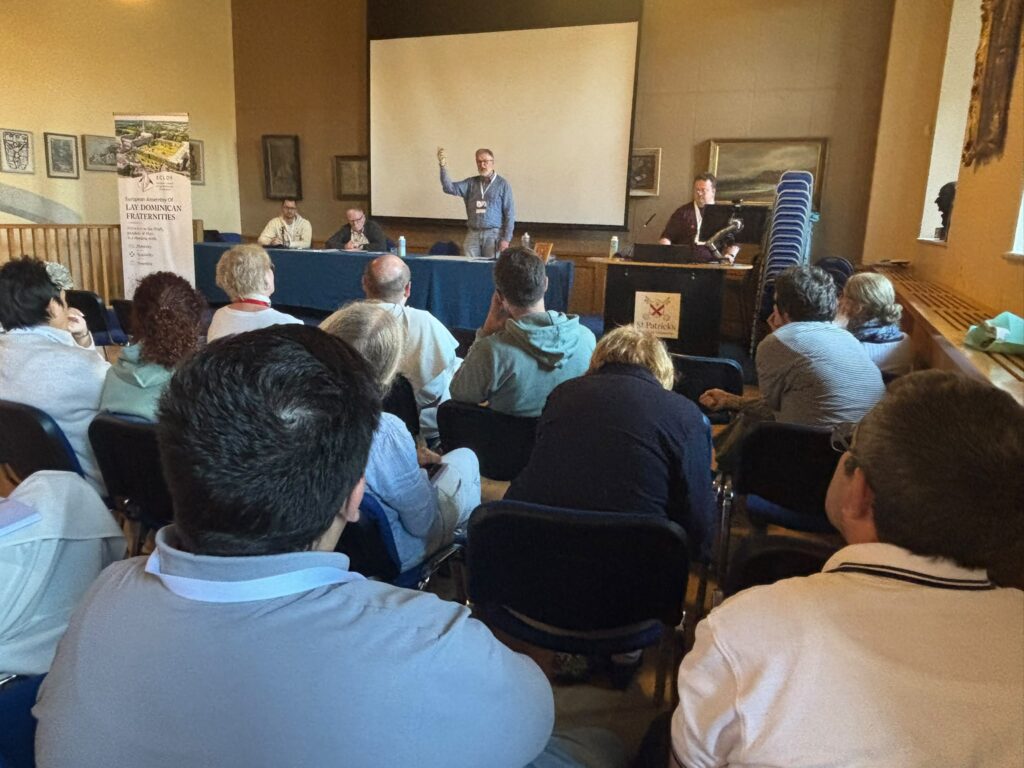
The presentation also highlighted the Order’s tradition of democratic governance and synodality, expressed in the principle, “What affects everyone must be discussed and approved by everyone.” Such a principle is more than an administrative method. It offers a school of patient listening, sincere dialogue and communal pursuit of the common good.
Reports from Europe revealed common challenges and signs of hope. In Belgium and the Netherlands, as well as Germany and Austria, changing structures have prompted new coordination across linguistic and cultural boundaries. France is strengthening representative structures across its wide territory. The Czech Republic and Slovakia are deepening cooperation, while Italy’s three provinces are pursuing greater collaboration in formation and preaching.
Across the continent, lay Dominicans are finding new languages for evangelization. German fraternities support urban theology courses and “Theology on Tap.” Those in Malta preach through radio, journalism and publishing, while Croatian lay Dominicans serve through Caritas, nursing homes and missionary initiatives. In Hungary, fraternities provide social services and a summer university for young adults. In the Nordic countries, lay Dominicans serve converts, prisoners and people experiencing homelessness.
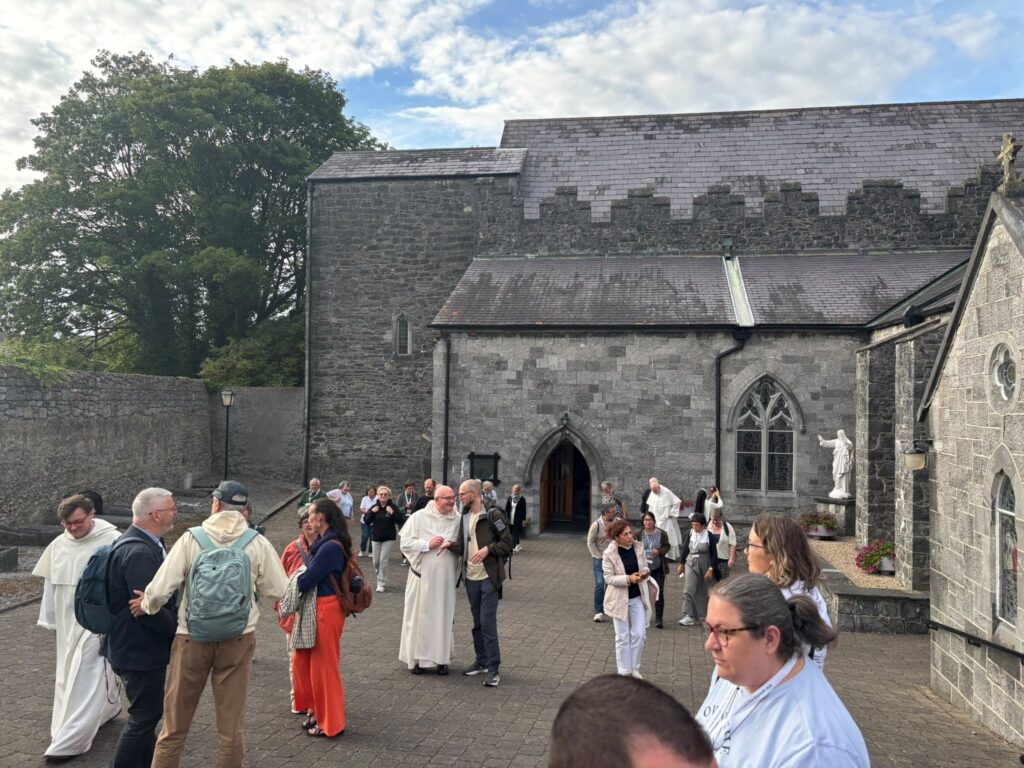
The assembly also carried out important work for the future. Delegates approved reforms to the ECLDF statutes intended to strengthen representation and make decision-making more effective. They welcomed Portugal’s proposal to establish the “Patricia Robinson, OP, European Lay Dominican Award,” honoring a pioneer in the development of European and international lay Dominican structures.
The assembly elected a new council composed of Gabriel Silva of Portugal, Philippe de Monneron of France, Karolina Stauberova of the Czech Republic, Catherine Wallis-Hughes of England and Pierre-Paul Boulanger of Belgium. The council met before the close of the gathering to begin carrying the work of Maynooth forward.
The deepest fruit of the assembly, however, will not be measured only in statutes, programs or reports. It will be seen in the fire delegates carry home to their fraternities. In a Europe marked by polarization, loneliness and a hunger for meaning, the Dominican laity is called to make truth credible by embodying it as mercy, joy and hope. Through prayer, study, fraternity and preaching, lay Dominicans can become lights in Europe—communities ready to welcome those who seek, accompany those on the margins and bear witness to the Truth who is Christ.