In a new book, a cloistered Dominican nun offers an inside look at monastic life, seeking to dispel common misconceptions and invite readers into the quiet joy of contemplation.
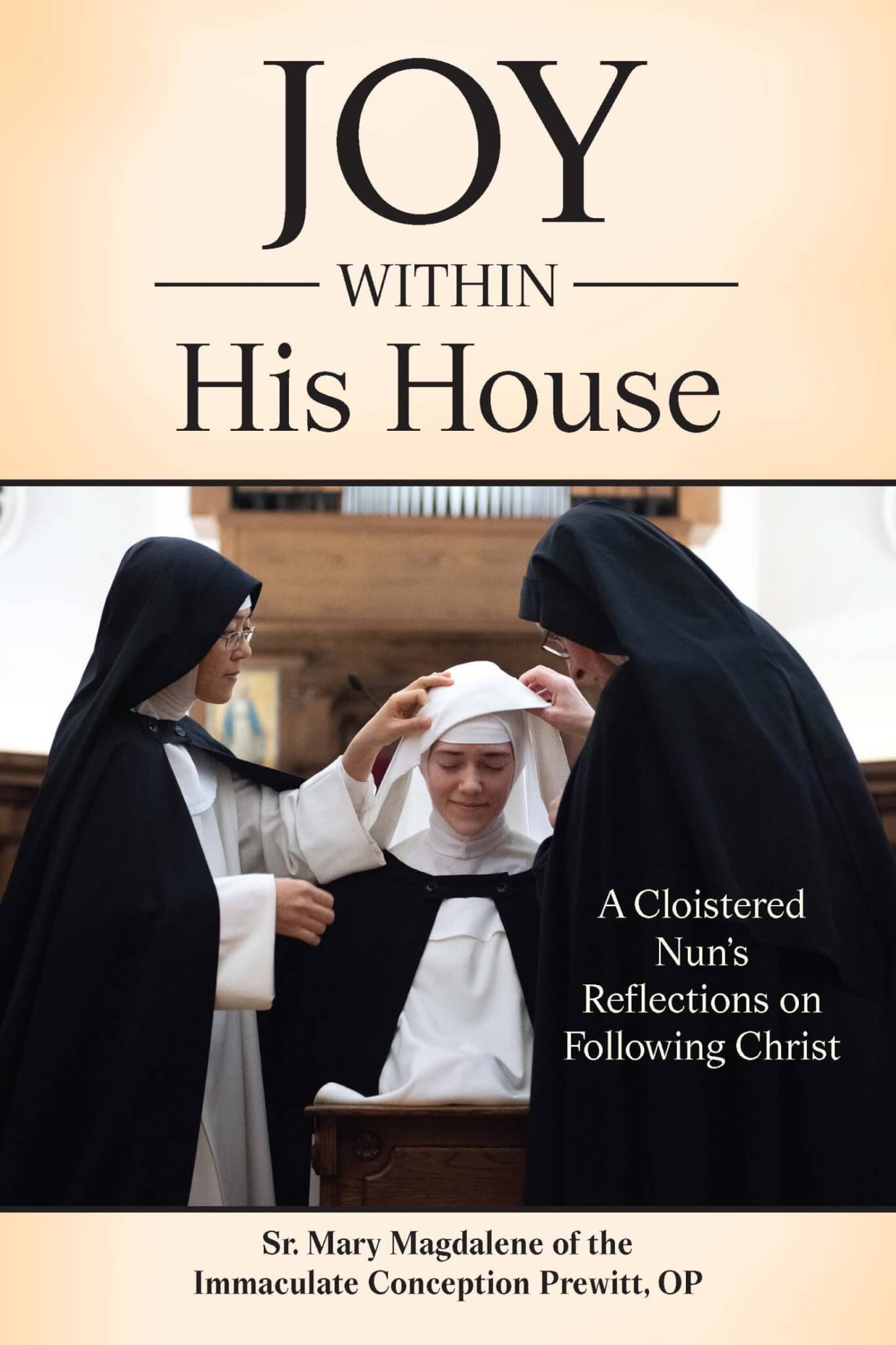
Many people imagine cloistered religious life as distant, inaccessible, or detached from ordinary human experience. In Joy Within His House: A Cloistered Nun’s Reflections on Following Christ, Sister Mary Magdalene of the Immaculate Conception, OP, a cloistered Dominican nun, challenges that perception, offering reflections drawn from lived experience within the monastery. Through theological insight and personal observation, the book aims to present the cloister not as an escape from humanity, but as a deeply human path of conversion and love.
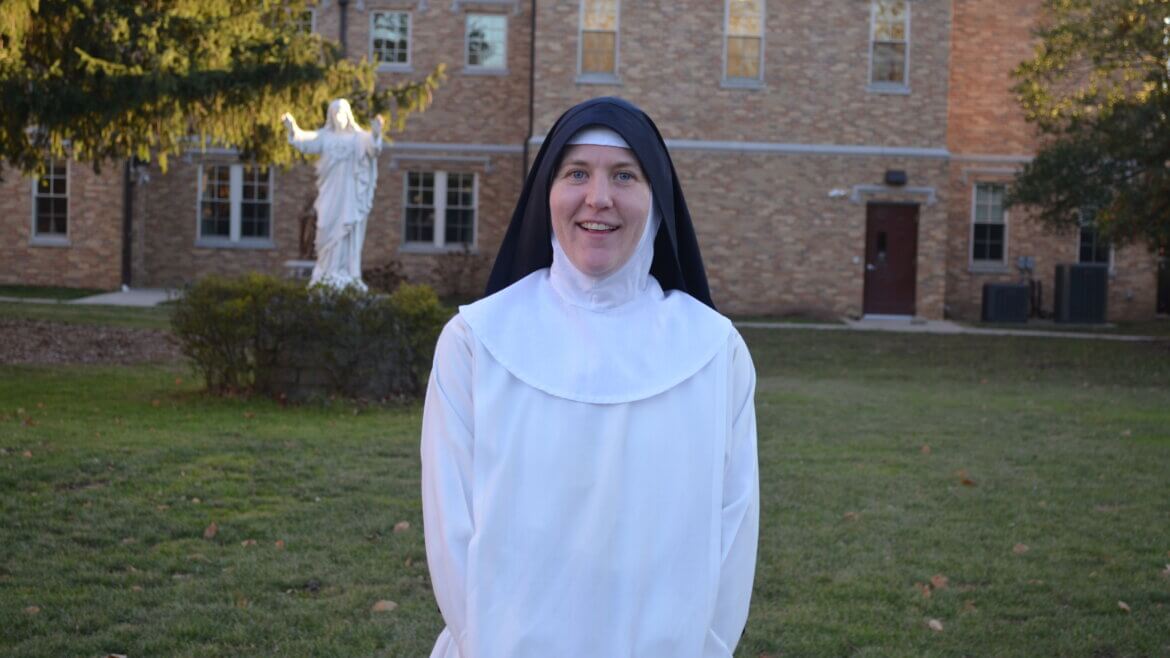
Addressing a common misunderstanding about cloistered life, Sr. Mary Magdalene notes that even she once viewed the vocation as “something lofty, removed, and other-worldly.” Her purpose in writing, she explains, is to show “how normal and human cloistered nuns are.” She emphasizes that religious life does not erase a woman’s individuality or history. “We are all sinners, seeking to become saints. Conversion is a lifelong process,” she writes. “A young woman who enters the cloister does not lose her personality, family, background, or talents. Rather, growth in charity is grace perfecting nature, and we become more of who God created us to be.”
Central to the book is the theme of joy, which Sr. Mary Magdalene grounds firmly in the Dominican intellectual and spiritual tradition. Drawing on St. Thomas Aquinas, she explains that joy is not merely an emotional state but something deeper and more stable. “Saint Thomas Aquinas defines joy as ‘the pleasure taken in a good possessed,’ which distinguishes it from happiness, which is more emotional or based on circumstances.” For cloistered Dominican nuns, she adds, this joy flows from a particular freedom. “As Nuns of the Order of Preachers, we seek to be ‘free for God alone,’ and that brings with it a possession of radiant joy.”
Although cloistered nuns do not preach publicly in the conventional sense, Sr. Mary Magdalene situates their vocation firmly within the Dominican mission of preaching. She explains that preaching from within the monastery begins with union with Christ and radiates outward through witness. “Dominican Nuns preach primarily through our relationship with Jesus Christ, which pours out into how we live our lives,” she writes, citing St. Paul: “It is no longer I who live, but Christ who lives in me” (Gal. 2:20). She underscores the formative power of this hidden witness, noting that “the powerful example of witness cannot be overemphasized as we seek to build up the Body of Christ by growing in love/charity.”
The book also draws on the Dominican Constitutions to articulate this contemplative mission. “Our Constitutions state, ‘the nuns are to seek, ponder and call upon him in solitude so that the word proceeding from the mouth of God may not return to him empty, but may accomplish those things for which it was sent.’” This, she explains, places the nuns “at the service of the Word for the salvation of souls,” even from behind monastery walls.
While much of cloistered life may seem foreign to those outside it, Sr. Mary Magdalene stresses that its spiritual rhythms are not inaccessible. When asked what aspect of monastic life laypeople might most fruitfully integrate into their own lives, her answer is simple: “Prayer.” She insists that prayer need not be time-consuming or complicated. “Most people can find time to talk to God throughout the day,” she writes, emphasizing that prayer is fundamentally relational. “Prayer is a relationship with a Person, Jesus Christ, and most of us, even those who live outside the monastery and are very busy, can find 30 seconds or 5 minutes here and there to talk to God.”
She explains that the monastic schedule is ordered toward fostering continual recollection, a practice she believes is possible for all Christians. “Our daily schedule is directed toward strengthening our relationship by fostering continual recollection. All Christians can do this.”
The theme of enclosure—often misunderstood as restrictive—receives particular attention in the book, especially for those discerning religious life. Sr. Mary Magdalene expresses hope that a young woman considering a vocation would come to see enclosure not as a burden but as a gift. “I would hope that she would see enclosure as a gift to us as cloistered nuns, allowing us to be ‘free for God alone’,” she writes. While some may view it as limitation, she argues that “it is a beautiful gift from the Church that enables us to focus exclusively on God.” Far from closing the heart, she adds, “Separation from the world opens our hearts in freedom to God’s love.”
The reflections also offer practical spiritual counsel for readers seeking deeper holiness in everyday life. One concrete recommendation Sr. Mary Magdalene makes is the intentional cultivation of silence. “Incorporate periods of silence in your day and use that extra time to talk to God,” she advises, acknowledging the challenges posed by constant distraction. This may require deliberate choices, such as setting aside one’s phone. “A fruitful practice can be to deliberately master it instead of allowing ourselves to be mastered by it.”
Here again, she turns to Scripture to frame the spiritual struggle as one of freedom and love. Citing St. Paul, she recalls the exhortation to “run the race so as to win” (1 Corinthians 9:24), urging readers not to be overcome by distraction but to “conquer it with good.” Even small offerings of time, she notes, are meaningful. “Love cannot be forced; it has to be free, and the Lord loves a cheerful giver (2 Corinthians 9:7), even if we are only giving Him 5 minutes.”
The book is available through the Dominican nuns’ Cloister Shoppe, OSV, and Amazon. The Cloister Shoppe also features the nuns’ Seignadou Soap and other handcrafted goods, including greeting cards, candles, and handmade wooden rosaries, offering readers an additional way to support the contemplative communities whose hidden lives continue to sustain the Church through prayer.