

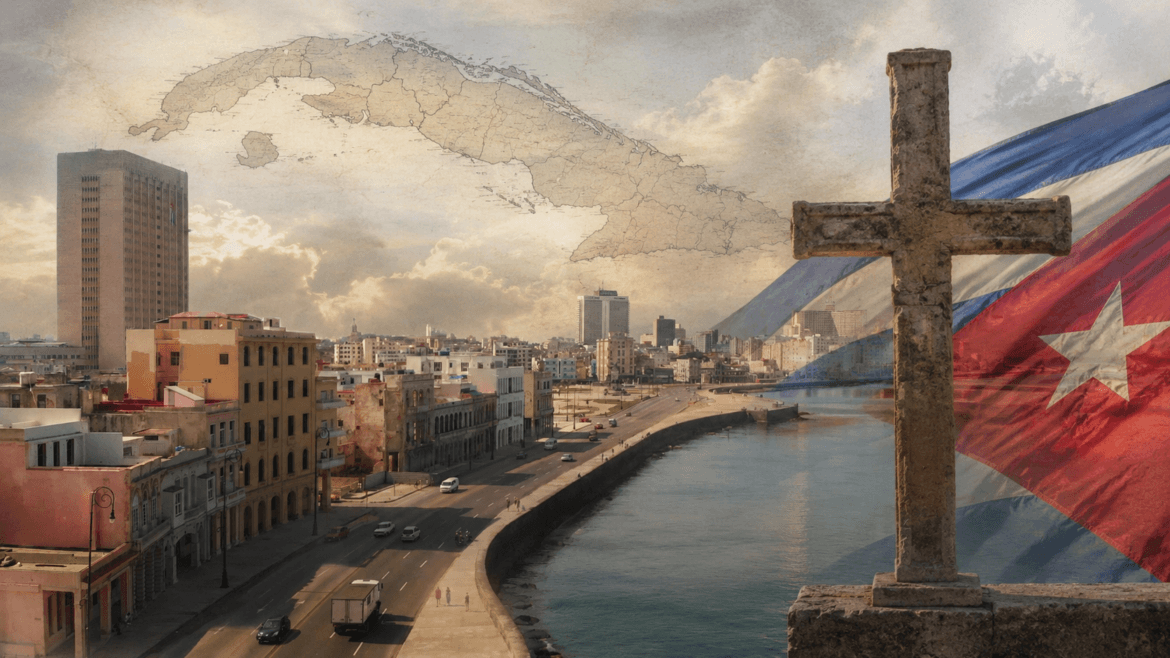
From Havana, with Hope: Dominican nuns reflect on their first year in Cuba
Dear brothers and sisters in Saint Dominic,
Warm greetings to each of you from Cuba, where we keep you very present in our prayers.
On May 17, one year had passed since we arrived at the Monastery of Saint Catherine of Siena in Havana, and thanks to God and to the prayers of the Dominican Family, we can tell you that we are doing well. We would like to thank you for the constant concern and support you have shown us during these twelve very difficult months for the Cuban people.
We wish to share, as much as possible, the experience we are living here, and this for two principal reasons: first, because although it is we who are here, in some way all of you are here as well, since this mission has been entrusted to the Order. The second reason is because, as Saint Augustine beautifully expresses it: “One does not love what one does not know.”
At present our community is composed of five nuns from Mexico and Argentina. Although this call within the call arose in each community in a particular way, when we spoke together we discovered common experiences that we will try to summarize in these lines.
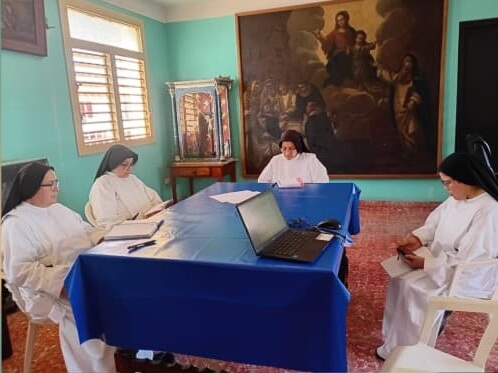
When first the Master of the Order, Fr. Gerard Timoner III, and later Pope Francis asked us to maintain the presence of the nuns in the monastery in Cuba, we certainly had the conviction that this was what the Lord desired; yet this did not spare us from facing fears, uncertainties, insecurities, sacrifices, and uprootedness in leaving behind our homeland, family, community, and friendships. In other words, it was an experience of “death” in order to give life.
Perhaps it was then that it became even more evident that the work belongs to God. The arduous process of discernment in each community — and we must acknowledge that it was not easy — was carried out by the Holy Spirit with the cooperation of each of its members. Only He could unite our wills in a harmonious “yes” in order to follow the designs of God.
Since then, we have been living the liberating adventure of obedience in faith, in which the Lord is never outdone in generosity. Our hearts have expanded, and the boundaries have extended far beyond what we could have foreseen. This communion in the mission of preaching has enriched us with new experiences, with concrete faces, with situations that reach the depths of the praying heart of the nun. It is an experience that everything is grace.
In this time we have spent in Cuba, we can tell you that day after day the Lord confirms through providential signs that He desires the presence of the nuns here.
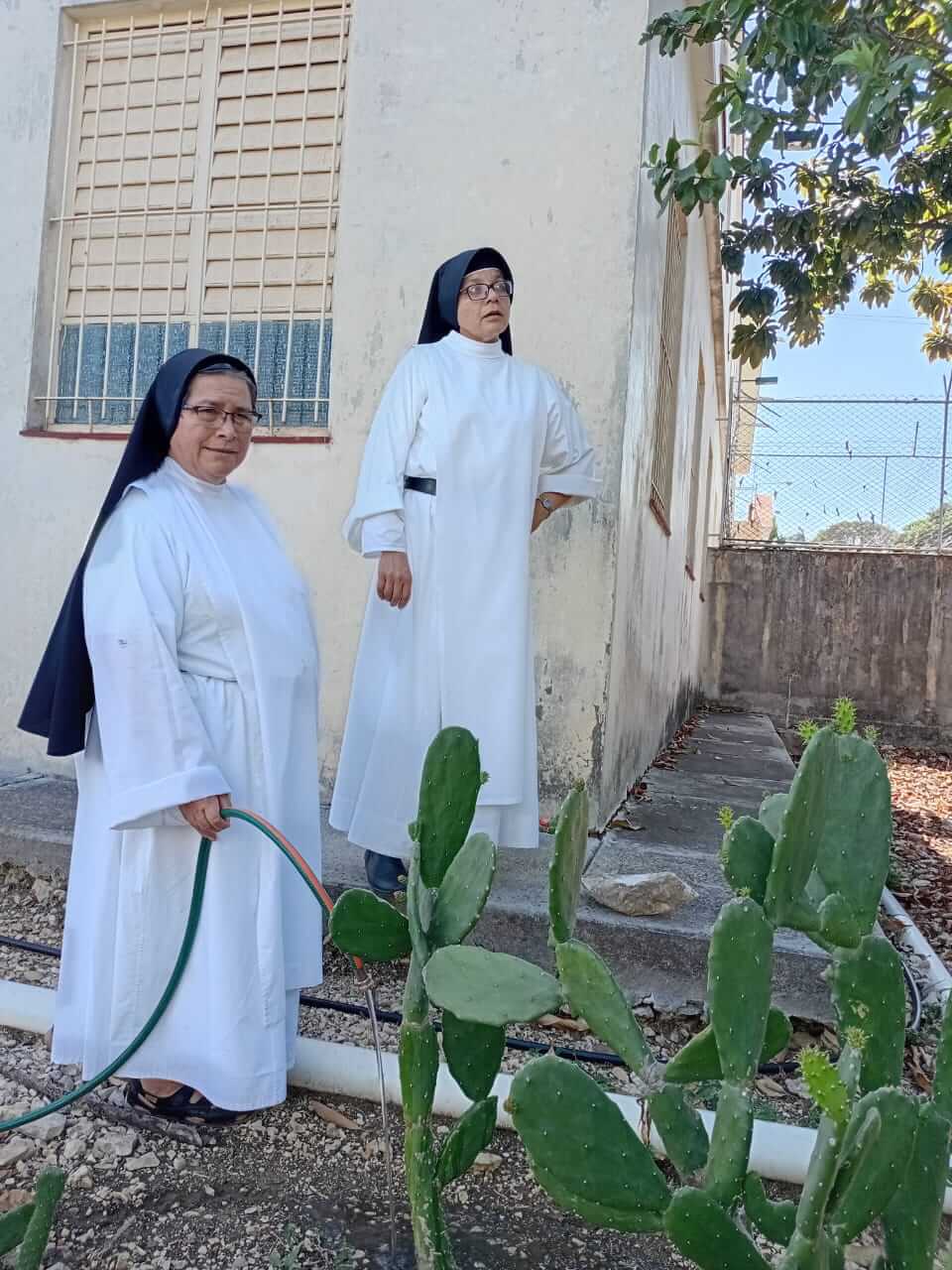
We are building community, walking with joy, and embracing our daily offering — which certainly involves many sacrifices — yet we live it with joy, a joy that can only come from the Holy Spirit. We are happy, and we are eager to give everything we can in order to renew the community.
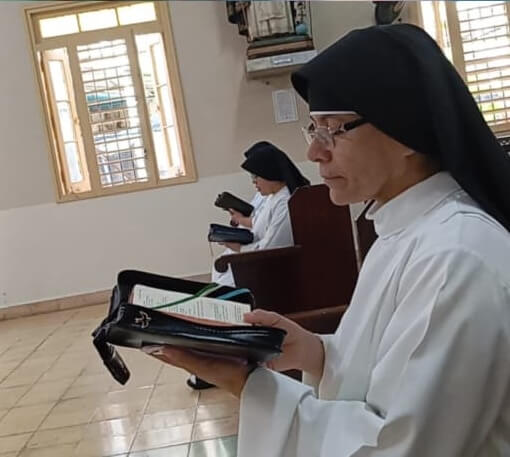
We are able to live our contemplative life, and it is beautiful to know that prayer of praise and intercession rises to God from this hidden “desert” of Christianity.
Of course, we can pray from anywhere, but to do so from the very wounds of situations of pain, oppression, suffering, and poverty becomes a cry of hope for the Cuban people and for the world. Every story is heard. It is a people who suffer greatly in every sense.
The friars rely on the prayers and fraternity of the nuns for their apostolate. They look after us so that we do not lack what is essential: the Eucharist, the Sacrament of Reconciliation, spiritual assistance, and they are also available to help us in every way possible. Thanks to their collaboration, projects are gradually taking shape to improve the principal conditions that support our way of life.
The shepherds of the Church, consecrated persons, and lay faithful want the doors of the monastery to remain open, and Cardinal Juan de la Caridad has visited us regularly since our arrival.
Our contact with the people most in need teaches us a great deal, and we perceive that, even groping in the dark, they are seeking God. We are witnesses to the conviction with which the few believers live their faith. We have been deeply moved by the joy of the friars when they administer a sacrament and by the profound emotion of faith among those who receive them. These simple experiences renew our self-offering and tell us that it is worth being here.
Thanks to readings in the refectory about the history of this monastery, whose foundation dates back to April 29, 1688, at the initiative of three Cuban sisters, we have learned many striking details, such as the constant solidarity and generosity of the nuns, as well as the contrast between the beneficial influence the monastery once had on society — religiously, culturally, architecturally, and so on — and its present fragility. There is a stark contrast between what existed before the Revolution and what came afterward. We are moved by the generous welcome they extended over the years to contemplative nuns expelled from their respective countries, including those from the Dominican Republic, Haiti, Venezuela, and Colombia.
The vicissitudes of history led to two later relocations from the original convent, until in 1961 some nuns were deported by ship while others remained in Cuba. At that time, Saint John XXIII asked the community not all to abandon the country under such circumstances, and according to the chronicle thirteen nuns remained. This demonstrates that Pope Francis was not the only Successor of Peter who expressly asked that the monastery not be closed.
Seeking support, the monastery joined in 1989 the Federation of Saint Mary of Guadalupe in Mexico, which continues to support it to this day and invites other sisters who may wish to experience accompanying the Cuban people, since this would appear to be pleasing to the Lord.
To conclude, we would like to share a few words addressed to us on November 22 by Cardinal Ángel Fernández Artime, SDB, Pro-Prefect of the Dicastery for Institutes of Consecrated Life and Societies of Apostolic Life. The purpose of his visit was to express to us the Holy Father’s affection and gratitude and to learn more closely about the work of consecrated persons in Cuba. He was accompanied by Fr. Celio de Padua García, O.P., and a member of the Conference of Religious, Fr. Evelio Rodríguez Soto, C.P., who is Cuban.
Bear fruit where God has planted you. The work belongs to the Holy Spirit, who counts on our cooperation. The contemplative life is a lung for the Church in this country.
…I see a joyful, united, and mature community that is a sign of hope for the Cuban people. You must remain here because in this monastery, which has no architectural value, you are not sustaining walls but rather the faith of the people and of the Church. Your presence is necessary, even if you are only five nuns…
Fr. Evelio, on behalf of the consecrated persons present in Cuba, and above all as a Cuban himself, thanked us for having come when so many of his compatriots are leaving the country. He also referred to the unity and solidarity among consecrated persons, something we ourselves have experienced. That meeting ended with prayer, a blessing, and the Cardinal’s promise to speak to the Holy Father about the community.
Please continue praying for Cuba and for us.
In Christ, Mary, and Saint Dominic,
Your sisters in Cuba

