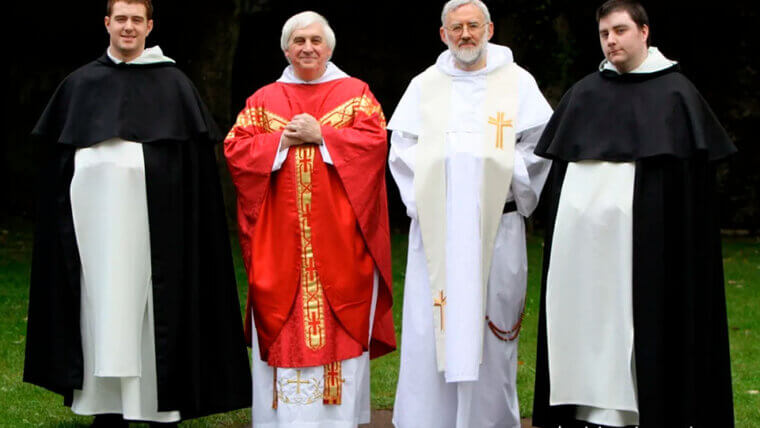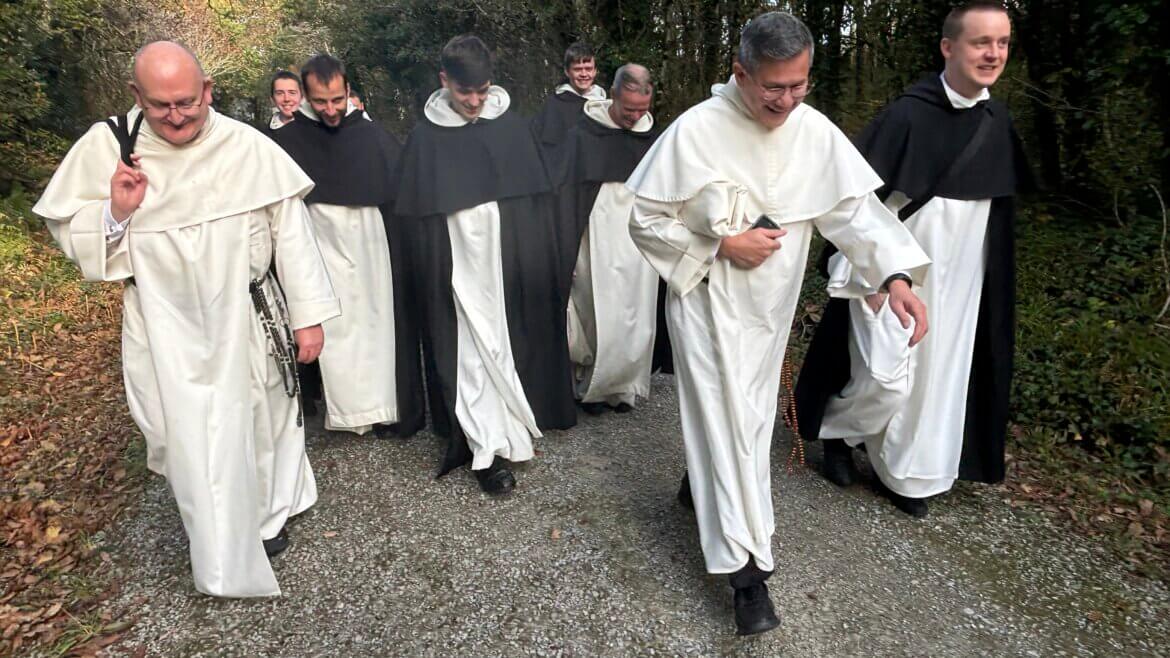
The Master of the Order on the Trail of the Dominican Martyrs in Ireland
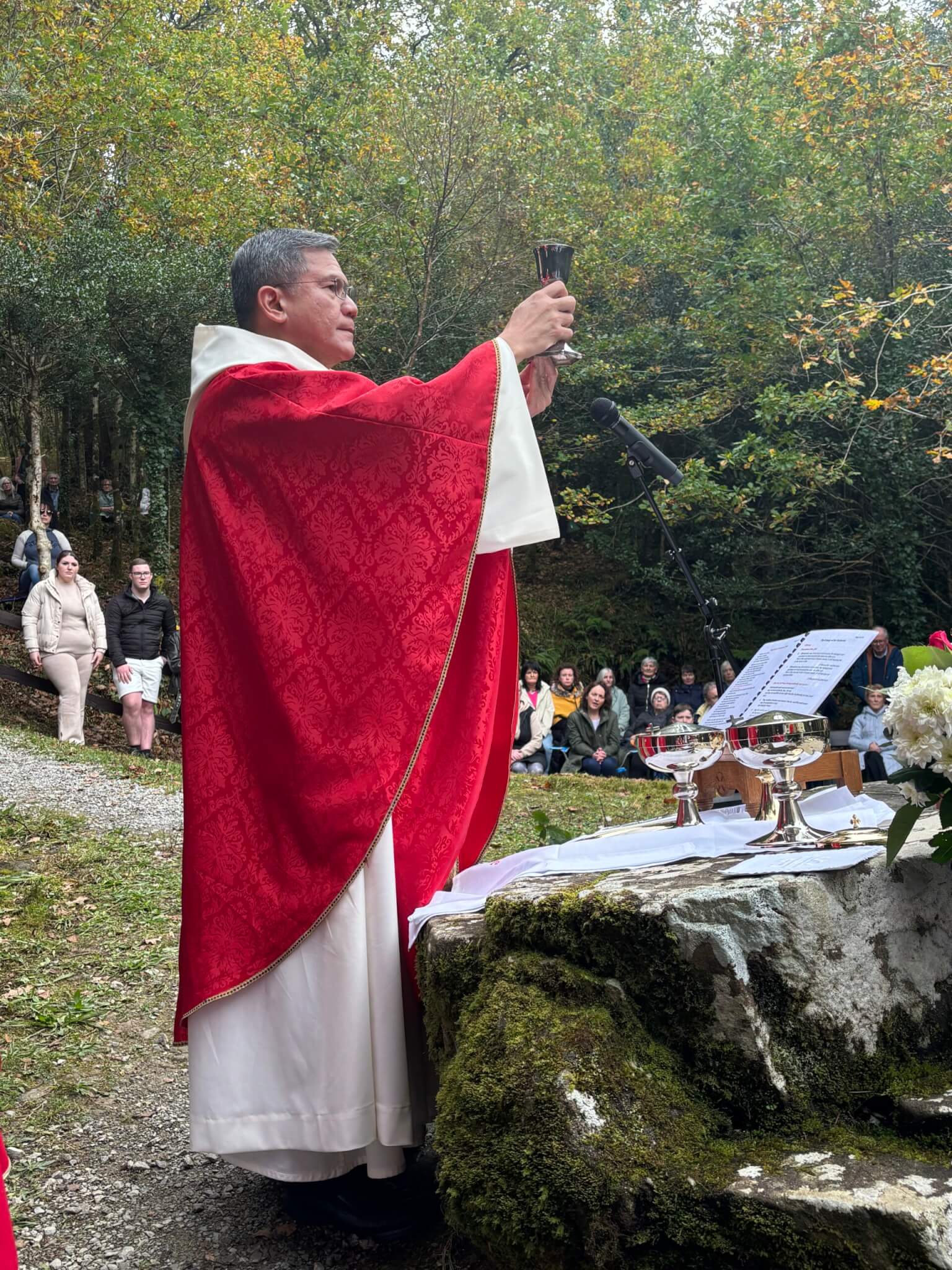
“Today we gather on holy ground,” said Br. Gerard Francisco Timoner III, OP, Master of the Order. “Not because of marble or gold, not because of a great cathedral, but because faith was lived here with courage. This rock, hidden in a Kerry wood, once served as an altar in a time when the Mass was forbidden. Here, in the shadow of fear, the light of Christ burned brightly. Here, Br. Thaddeus Moriarty, Dominican friar and son of this land, stood among his people to offer the Holy Sacrifice of the Mass.”
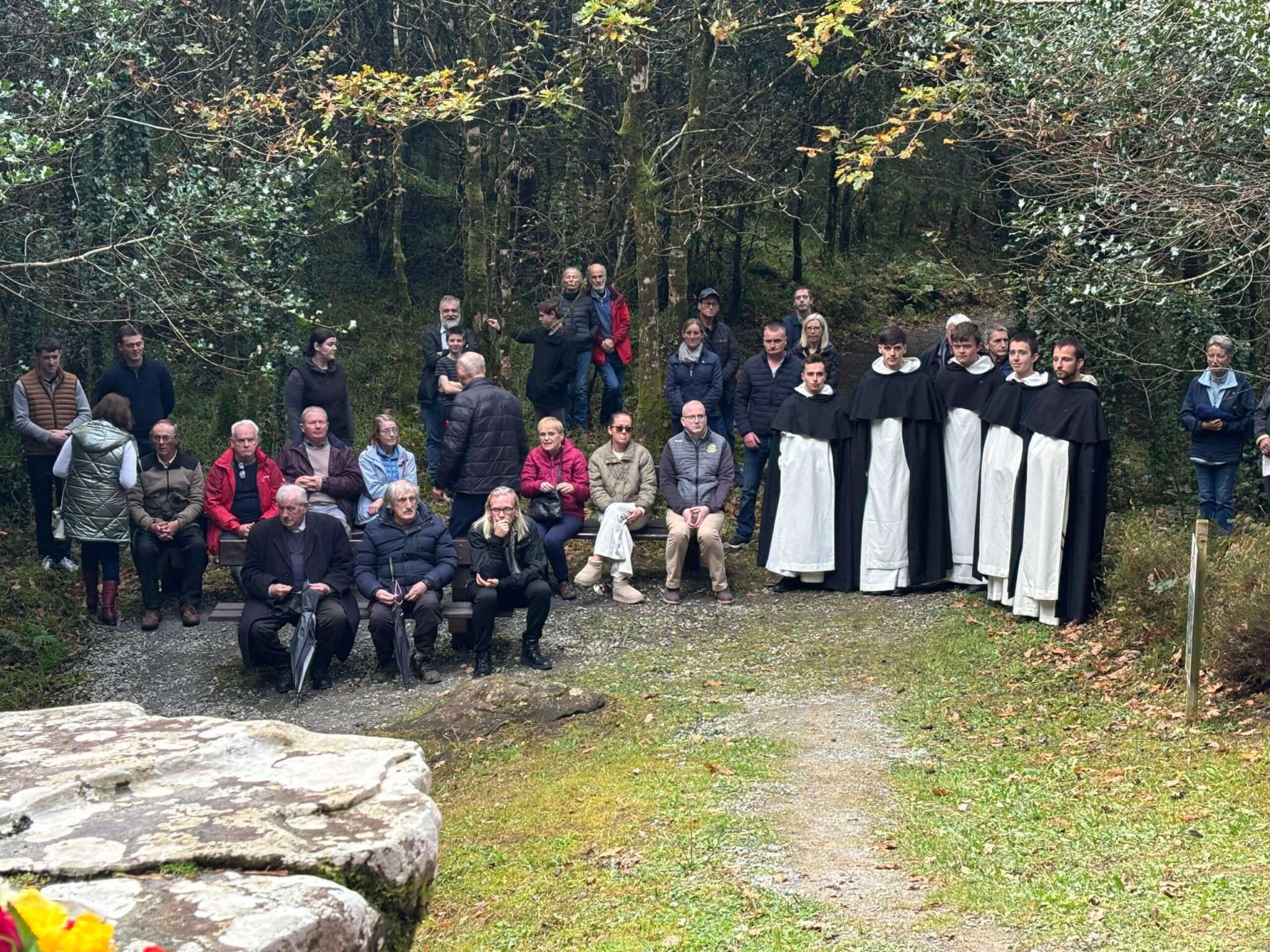
At one of Ireland’s Mass Rocks, where the Eucharist was secretly celebrated during persecution by the English Crown, the Master of the Order prayed for the beatification of the martyr and used his chalice during the celebration of Holy Mass. The event took place during his visitation to the Province of Ireland, with many faithful and Dominicans present, including newly vested novices.
Obey God Rather Than Men
Br. Thaddeus Moriarty, OP, was a victim of the persecution that sought to extinguish the Catholic faith in Ireland. After repeated efforts to suppress the Church, the English Crown ordered the banishment of all priests, under penalty of death. Many Dominicans went underground, living as merchants, and celebrated Mass in secret.
On 15 August 1653, Br. Moriarty was discovered while celebrating Mass at Poll an Aifrinn in Kilclohane Wood. Arrested and taken to Ross Castle in Killarney, he was interrogated and tortured. When asked why he had defied the law, he simply replied: “God’s law must be obeyed more than man’s.”
Faith Often Requires Risk
During the memorial Mass, Provincial Br. John Harris, OP, reminded the faithful that the commemoration was not only about the past but also a call to strengthen faith today.
“These Mass Rocks are altars of courage,” he said, “built by faith, consecrated by suffering, and blessed by hope.” The persecution showed that “faith does not depend on buildings of stone, but on hearts of flesh filled with courage, faith, and prayer.”
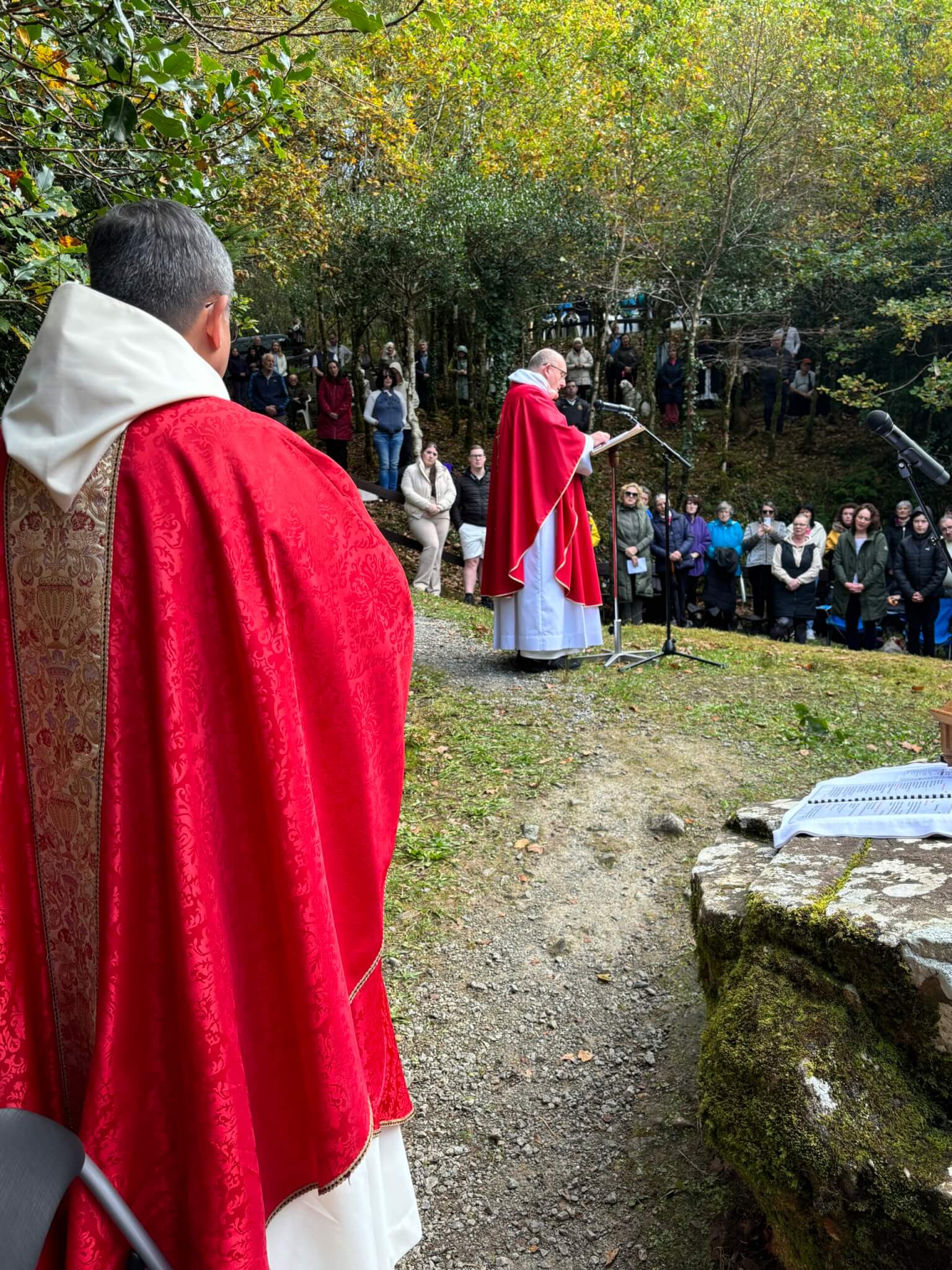
Br. Harris emphasized: “Faith often requires risk. In every age, Christians are called to stand firm—not always before soldiers, but before the temptations of comfort, indifference, and social acceptability. The persecution of Cromwell and his troops may have ended, but the challenge to faith remains: to live the Gospel in a world that often rejects God.”
The Mass Rock, he concluded, remains a testament “that Christ cannot be captured, faith cannot be silenced, and love cannot be chained.”
The Buried Madonna Who Became the City’s Refuge
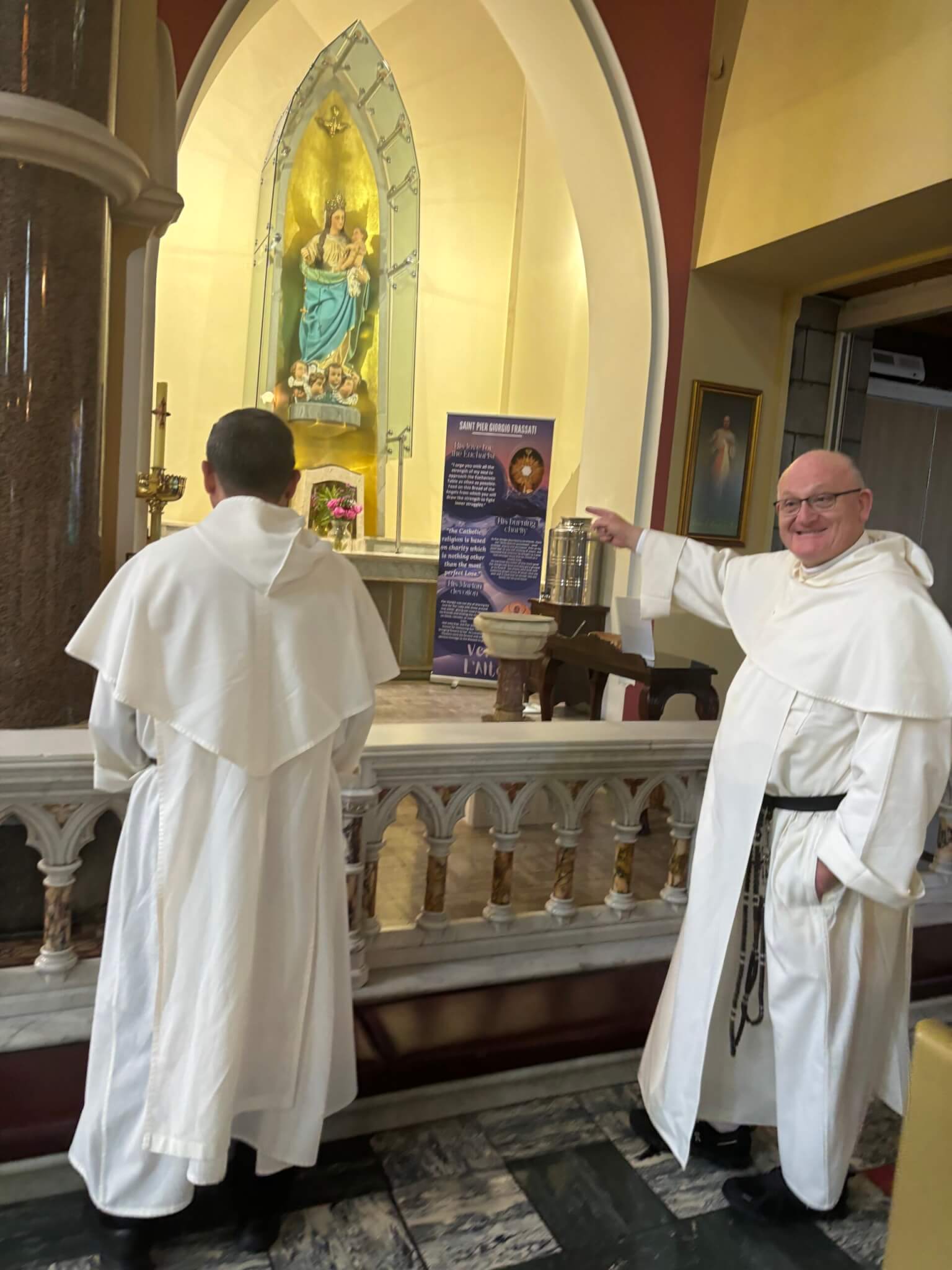
The previous day, the Master of the Order visited the Dominican Sisters and the statue of Our Lady of Limerick. The statue was originally offered as an act of penance by the nephew of a judge who had condemned John Burke, a member of the Rosary Confraternity, to death.
The statue and a chalice are closely linked to Bl. Terence Albert O’Brien, OP, Prior of Limerick, Provincial of Ireland (1642), and later Bishop of Emly. During the siege of Limerick in 1651, both were buried to keep them safe. Br. O’Brien remained in the city despite the danger, caring for plague victims. Arrested after the fall of the city, he was executed on 30 October 1651, dying a martyr for the faith.
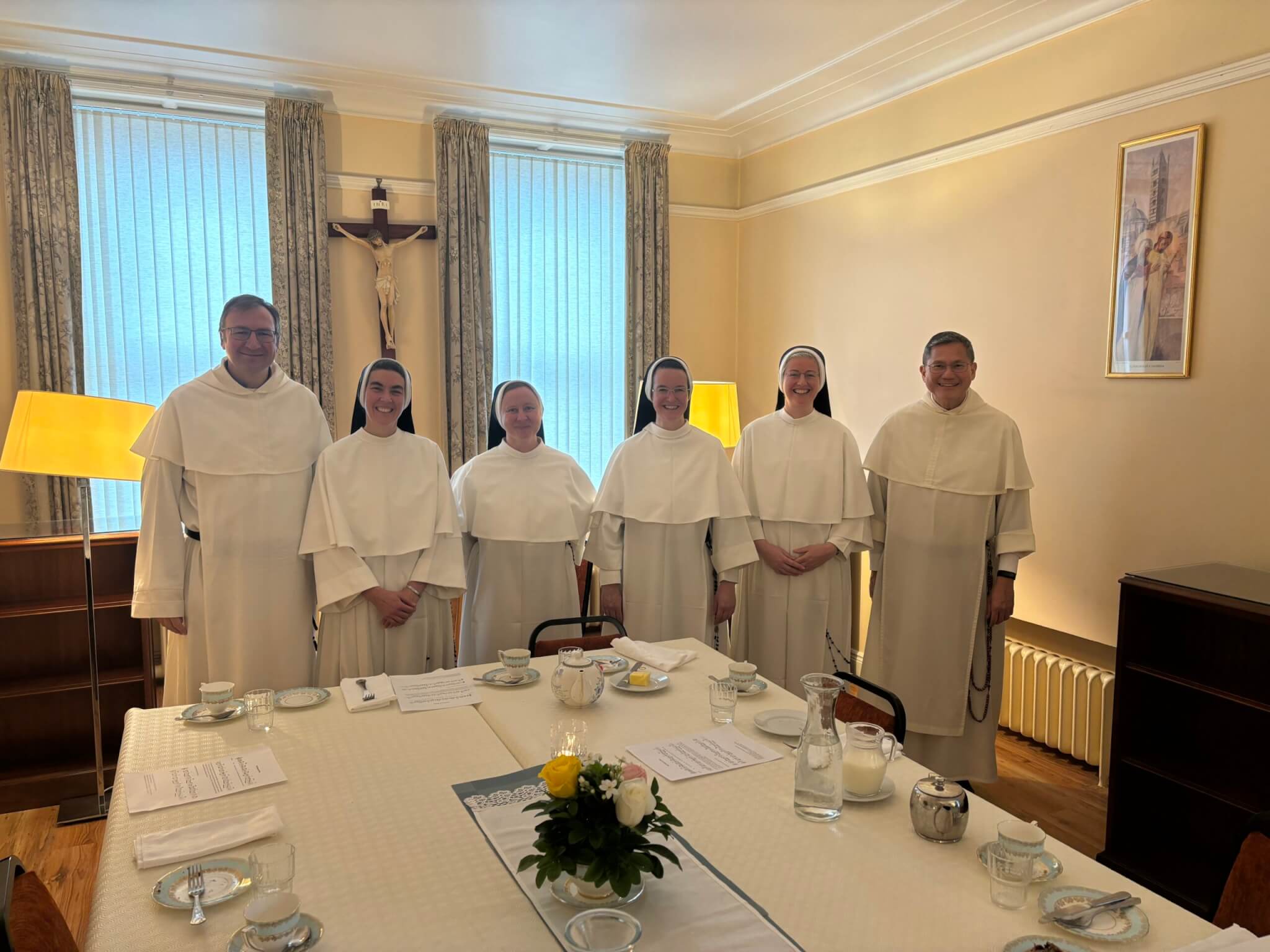
In 1780, when a small chapel was built to replace the former convent, the statue was rediscovered and placed beside the main altar. Since then, Our Lady of Limerick has been greatly venerated as a sign that faith and love are stronger than persecution and death.
“The Church Is Built of Hearts”
“May this stone always remind us that the Church is not built only of walls,” said Br. Gerard Francisco Timoner III, OP. “It is built of hearts that refuse to forget Christ. May the memory of Br. Thaddeus Moriarty inspire us to cherish the Eucharist, to live the faith boldly, and to hand it on to the next generation—not as a relic, but as a living and life-giving gift.”